
A Guide to Poetry Types for Short Story Writers

Editorial Team · on 25 July 2026 · 7 min read · Last reviewed 25 July 2026
Poetry types are distinct forms of poetry that use specific structures, rhythms, and themes to convey emotions and ideas, ranging from the structured sonnet to the free-form haiku.
- There are over 50 recognized poetry types, each with unique structures and purposes.
- The most common poetry types include sonnet, haiku, limerick, epic, and free verse.
- Poetry types can be categorized by their form, content, and cultural origins.
- Some poetry types, like the haiku, originate from specific cultures and have strict syllable rules.
What are the 12 types of poetry?
There are many types of poetry, but twelve of the most widely recognized include acrostic, ballad, elegy, epic, free verse, ghazal, haiku, limerick, ode, sonnet, villanelle, and narrative poetry.
- Each of these 12 poetry types has its own unique structure and purpose.
- Acrostic poetry uses letters to spell a word or phrase vertically.
- Ballads tell a story, often with a musical rhythm.
- Elegies are poetic lamentations, often for the dead.
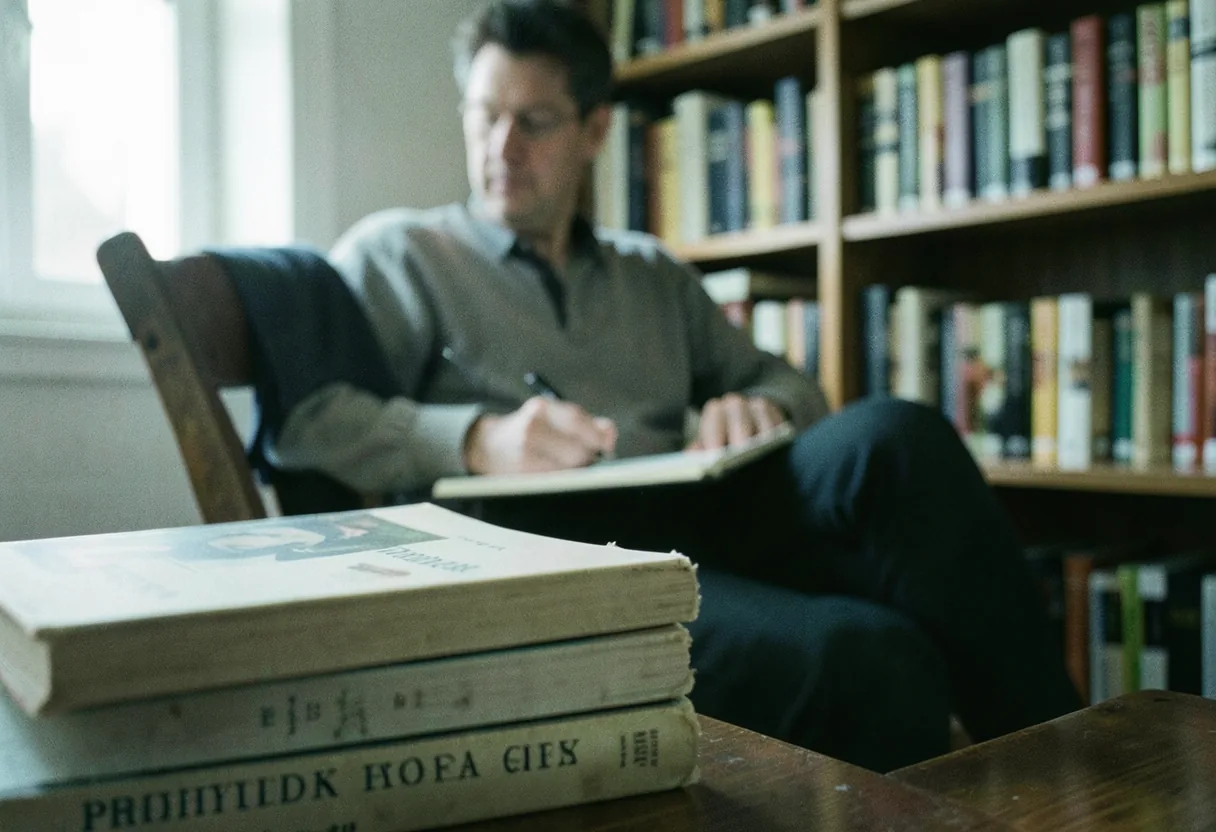
Free verse vs. blank verse
Free verse is poetry without a fixed meter or rhyme scheme, while blank verse is poetry written in unrhymed iambic pentameter.
- Free verse does not follow any specific rhyme or meter.
- Blank verse follows an unrhymed iambic pentameter.
- Both forms are widely used in modern poetry.
| Poetry Type | Structure | Example |
|---|---|---|
| Acrostic | Letters spell a word or phrase vertically | Example: Writing an Acrostic Poem: Structure and Examples |
| Ballad | Narrative with musical rhythm | Example: “The Ballad of Tam Lin” |
| Elegy | Mournful lamentation | Example: “Elegy Written in a Country Churchyard” by Thomas Gray |
| Epic | Long narrative of heroic deeds | Example: “The Odyssey” by Homer |
Key poetry terms
Key poetry terms include meter, rhyme, stanza, and verse.
- Meter refers to the rhythmic structure of a poem.
- Rhyme is the repetition of similar sounds at the end of words.
- Stanza is a group of lines in a poem, similar to a paragraph in prose.
- Verse is a single line of poetry.
| Poetry Term | Definition | Example |
|---|---|---|
| Meter | Rhythmic structure | Example: Iambic pentameter |
| Rhyme | Repetition of similar sounds | Example: “cat” and “hat” |
| Stanza | Group of lines | Example: A quatrain has four lines |
| Verse | Single line of poetry | Example: “Roses are red” is a verse |
How to choose the right poetry type for your short story
To choose the right poetry type for your short story, consider the story’s theme, mood, and the effect you want to create.
- Identify the theme and mood of your short story.
- Research different poetry types and their characteristics.
- Experiment with different forms to see which one best fits your story.
- Seek feedback from others to refine your choice.
How to incorporate poetry into your short story
To incorporate poetry into your short story, you can use it for dialogue, descriptions, or even as a narrative device.
Simply put: Incorporating poetry into your short story is like adding spices to a dish, enhancing the overall flavor and depth of your writing.
- Poetry can be used to express deep emotions or complex ideas.
- It can add a unique rhythm and musicality to your prose.
- Poetry can help break up the monotony of traditional narrative.
Common mistakes to avoid when writing poetry for short stories
Common mistakes to avoid when writing poetry for short stories include forcing a rhyme scheme, overcomplicating the structure, and neglecting the story’s flow.
- Forcing a rhyme scheme can make the poetry feel unnatural.
- Overcomplicating the structure can distract from the story.
- Neglecting the story’s flow can disrupt the reader’s engagement.
Historical evolution of poetry types
Poetry types’ historical evolution reflects cultural and artistic developments of different eras, from the oral traditions of ancient epics to the experimental forms of modern poetry.
- Ancient epics like “The Iliad” and “The Odyssey” were part of oral traditions.
- The sonnet form was popularized during the Renaissance, with poets like Petrarch and Shakespeare.
- The haiku originated in 17th-century Japan, with poets like Matsuo Bashō.
- Modern poetry types, such as free verse, emerged in the 19th and 20th centuries.
| Era | Poetry Type | Example |
|---|---|---|
| Ancient | Epic | Example: “The Epic of Gilgamesh” |
| Renaissance | Sonnet | Example: “Sonnet 18” by Shakespeare |
| 17th Century Japan | Haiku | Example: “The Old Pond” by Matsuo Bashō |
| Modern | Free Verse | Example: “The Red Wheelbarrow” by William Carlos Williams |
Poetry types in different cultures
Across different cultures, poetry types vary, each with its unique traditions and forms, from the ghazal in Persian literature to the tanka in Japanese poetry.
- The ghazal originates from Arabic and Persian poetry, with themes of love and longing.
- The tanka is a Japanese poetry form with a 5-7-5-7-7 syllable structure.
- The sestina, originating in France, is a complex poetic form with repeating end words.
- The limerick, popular in English-speaking countries, is a humorous five-line poem.
| Culture | Poetry Type | Example |
|---|---|---|
| Persian | Ghazal | Example: “Ghazal 1” by Hafez |
| Japanese | Tanka | Example: “Tanka on a Summer Day” by Kakinomoto no Hitomaro |
| French | Sestina | Example: “Aune” by Arnaut Daniel |
| English | Limerick | Example: “There was an Old Man with a Beard” by Edward Lear |
In my experience, the key to successfully incorporating poetry into short stories is to strike a balance between structure and creativity. By knowing the different types of poetry and their unique characteristics, you can enhance your storytelling and create a more immersive experience for your readers.
Frequently asked questions
What distinguishes a sonnet from a haiku?
A sonnet is a 14-line poem with a fixed structure and rhyme scheme, often looking at themes of love or reflection. Shakespearean sonnets use iambic pentameter and end with a rhyming couplet. A haiku, originating from Japan, consists of three lines with a 5-7-5 syllable pattern, typically capturing a moment in nature.
Why might a short story writer use free verse?
Free verse ignores strict meter and rhyme, offering flexibility to mirror natural speech rhythms. It allows writers to focus on imagery and emotional impact without structural constraints. For example, Walt Whitman's 'Leaves of Grass' exemplifies free verse's adaptability.
How can a villanelle enhance a short story?
A villanelle's repetitive structure creates a haunting, musical effect. Its 19 lines, with two refrains, can underscore themes of obsession or inevitability. Dylan Thomas's 'Do Not Go Gentle Into That Good Night' demonstrates this powerfully.
When is blank verse useful in short fiction?
Blank verse, unrhymed iambic pentameter, lends a formal, rhythmic quality. It suits dramatic or elevated moments. Shakespeare's plays often use blank verse for soliloquies, highlighting internal conflict or profound thoughts.
See also: Writing a Love Poetry Poem: Themes and Rhythm.